
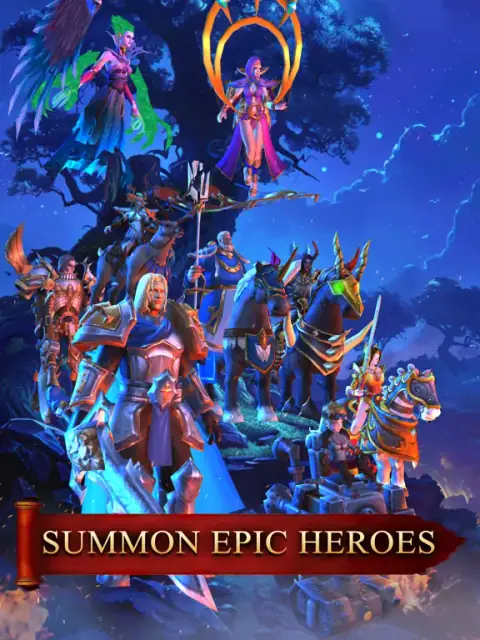
Heroes turn an army list into a battle plan
In a fantasy RTS, heroes matter when their roles change real decisions. A tank creates space, a control hero interrupts pressure, burst damage punishes exposed targets, and healing or revival extends a formation’s survival. Their value depends on troop positioning, enemy counters, and ability timing—not on rarity or power alone. Strong hero design creates several viable ways to solve the same battle.
- Role first: identify what battlefield problem the hero solves.
- Timing matters: a strong ability used too early can be wasted.
- Build a formation: heroes, troops, and guardians should reinforce one another.
Why heroes change real-time strategy
In a hero RTS game, the army and commander are designed together. A burst-damage hero can punish a tightly grouped enemy. A control hero can hold dangerous units in place. A tank creates time for ranged troops, while healing or revival can protect a formation during a long encounter. These roles turn army composition into a plan.
Alliance at War uses heroes such as the Sorceress, Dwarf King, and Oracle to give formations different identities. The useful question is not simply which hero has the highest number. It is which combination supports the mission, enemy, and troops you are bringing.
Choosing a hero-based RTS on mobile
Start with one decision you want to make: hold a target with control, reposition a vulnerable unit or time a damage skill. Then inspect whether the mobile game gives you that action in the mode you plan to play. A persistent hero roster and manual battle control are separate features.
In Alliance at War, the Sorceress, Dwarf King and Oracle illustrate damage, control and revival roles. Compare their current skill descriptions with the job missing from your formation. The hero roles and formations guide gives a practical starting point, and the manual-control guide connects formation choices with battlefield actions.
If you are coming from Warcraft III, use the mobile alternatives comparison to separate familiar hero tactics from the different progression systems surrounding them.
What can you control in a hero RTS?
In AAW, check which commands your chosen mode offers. Manual actions are available in selected RTS battles; preparing a roster is a separate decision from issuing orders during combat.
Swipe the table sideways on a narrow screen to compare every column.
| Decision | What to check | When it applies |
|---|---|---|
| Movement | Select a unit and issue a position change; observe whether support remains protected. | Selected manually controlled RTS battles. |
| Target | Inspect the threat and whether the selected unit can reach the intended enemy. | Where that battle mode exposes target commands. |
| Skill | Read the current ability description and check the available command and timing. | Where manual skill activation is enabled for that hero and mode. |
| Formation | Choose complementary roles and starting positions before the encounter. | Preparation; available units and formation rules depend on the mode. |
Watch the official AAW RTS short for the selected-character panel, health bars and skill bar. Published December 10, 2024, it is not a current-version full match. Follow the battle controls guide for a repeatable first exercise.
When your front line struggles, inspect the formation first
- Locate the pressure: identify the threatening enemy and the unit taking damage.
- Check the support: see whether damage and support roles are positioned to help, using their current skill descriptions.
- Change one decision: adjust a starting position on the next attempt, or issue one available movement or target command in a manual mode.
- Compare the outcome: note whether support stayed protected and your chosen unit reached its target. A different enemy or upgrade can also change the result.
This practice is a way to diagnose a formation, not a winning sequence proven by the short. Use the hero roles guide to choose the next change.
The following roles are general composition examples. Check the live hero and enemy descriptions before assuming a particular counter exists in your battle.
| Hero role | Battlefield job | Formation need | Common counter |
|---|---|---|---|
| Tank / control | Absorb pressure and interrupt threats | Damage dealers positioned behind | Kiting, range, or control immunity |
| Burst damage | Remove a priority target quickly | Setup and protection | Disruption or damage reduction |
| Support / healing | Extend the fight and protect value | Spacing and time to cast | Focus fire or anti-heal effects |
| Revival | Recover from a decisive loss | Correct timing and protected follow-up | Repeat burst or crowd control |
Guardians add a second layer to hero strategy
Fantasy strategy games can expand army identity through powerful creatures and guardians. Phoenix, Fire Dragon, Cerberus, and Giant Ape are not just visual rewards in Alliance at War. They give commanders another variable when shaping a team around damage, pressure, survival, or control.
This creates a broader composition puzzle: heroes define tactical roles, troops determine the formation, and guardians add another source of battlefield power. A successful build needs these parts to reinforce one another.
Campaigns are a training ground for better command
A fantasy RTS campaign should introduce new pressures rather than repeat the same encounter. Bosses, defensive missions, elite enemies, skill checks, and rankings encourage players to adjust their approach. Castle defense asks a different question from an open battlefield, while a campaign boss may reward careful timing more than raw power.
These missions help players learn what their heroes actually do. A failed attempt can reveal a weak formation, poor target selection, or an ability used too early. That feedback is important in any strategy game because progression feels more satisfying when knowledge improves alongside power.
How a mobile fantasy RTS connects to SLG progression
Alliance at War is not only a sequence of isolated RTS matches. It also includes persistent city growth, troop development, hero progression, protection systems, alliances, and cross-server events. This is the mobile SLG layer: decisions and upgrades remain between sessions.
The hybrid structure serves two kinds of strategy. Long-term planning determines what heroes and troops are ready. Real-time control determines how effectively that strength is used in battle. Players who enjoy both preparation and execution can move between short tactical encounters and larger kingdom goals.
Build a formation in Alliance at War
Pair persistent hero development with touch-based movement and skill timing in selected fantasy RTS battles.
For a broader choice between army commands, settlement planning and lasting progression, compare fantasy strategy games on mobile. For platform and connection requirements, use the Android and iOS RTS guide.
What classic fantasy RTS fans should check before downloading
Players coming from classic PC fantasy strategy games often value hero identity, distinct armies, readable magic, campaigns, and manual control. On mobile, it is worth checking how much of the battle is interactive, whether heroes have clear roles, and whether long-term systems add meaningful goals.
If you are specifically searching for games like Warcraft 3 on mobile, remember that a persistent mobile SLG has a different structure from a match-based PC RTS. Alliance at War focuses on the overlap: fantasy armies, heroes, active troop commands, campaigns, and tactical abilities, then connects them to alliance-scale progression.
FAQ
What is a hero RTS game?
It is a real-time strategy game where named heroes or commanders use distinct abilities and influence army composition, positioning, and battle tactics.
Does Alliance at War have manual battles?
Yes. Selected RTS battles support manual movement, target selection and skills. Check the current rules and available commands of the mode you enter.
Is it a fantasy strategy game for Android and iOS?
Yes. Alliance at War is available on Google Play and the App Store.
Can heroes be used in alliance wars?
Heroes, troops, and guardians contribute to the wider strategy used across campaign, defensive, cooperative, and alliance war content.
Official product sources
Published by Hour Games, the publisher of Alliance at War. Product source check: October 13, 2026.
Hero names, abilities, and available battle modes can change with game updates. Confirm current details in the live game and store release notes.