
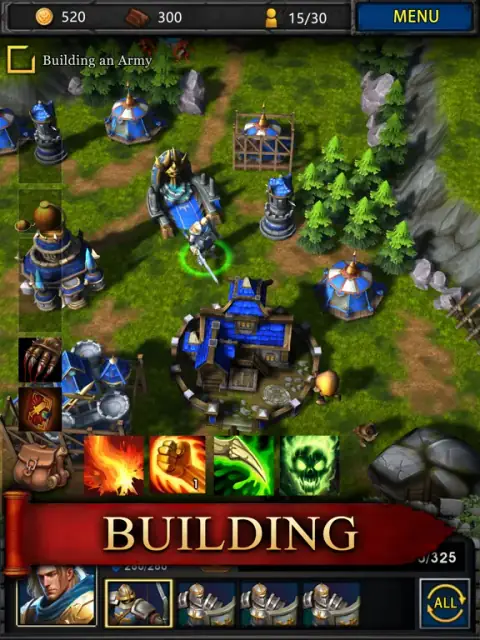
- Start with the progression loop: does your city or army continue between sessions?
- Check combat separately: a persistent strategy game can also include real-time battles.
- Compare time commitments and purchase options before joining a competitive alliance.
What does SLG stand for?
SLG is commonly used as shorthand for simulation game; “simulation strategy game” is also used in mobile-game discussions. Usage varies across regions and publishers. It is a descriptive label, not a universal ruleset or a guarantee that every game has the same systems.
This guide focuses on the persistent strategy branch: development, resource planning, armies and shared objectives. GameRefinery groups this mobile genre as 4X Strategy/SLG, illustrating that industry usage often overlaps. Farming simulations and other simulation genres need their own gameplay checks; they should not automatically be treated as alliance war games.
SLG game examples: three different approaches
Swipe the table sideways on a narrow screen to compare every column.
| Game | Development and combat | Social play and purchases |
|---|---|---|
| Rise of Kingdoms | Historical civilizations, city development and commander-led movements on a shared map. | Alliances and territorial objectives; free download with in-app purchases. |
| Lords Mobile | Kingdom upgrades, troop formations and a separate hero campaign. | Guild activities and kingdom wars; free download with in-app purchases. |
| Alliance at War | Fantasy city and hero progression, with manual troop movement in selected RTS battles. | Alliance events and cross-server objectives; free download with optional purchases. |
These are examples, not a ranked list. Hour Games publishes Alliance at War. The external-game descriptions summarize developer listings rather than a hands-on comparison.
One SLG decision: reserve resources or develop another hero?
Imagine you are preparing one AAW formation for an alliance objective. An upgrade competes with the resources you want to keep for the event. Work backward from the missing requirement, rather than collecting and spending without a goal.
- Identify the obstacle. Read the selected hero, formation and upgrade panels. Decide whether the problem is a prerequisite, survivability or damage before choosing what to improve.
- Check the resource type. Wood, stone, iron, food and gold are strategic resources. Red and green diamonds are purchasing currencies. Red diamonds come from purchases or selected event gifts; green diamonds are mostly awarded through gameplay systems. Do not treat the currencies as interchangeable.
- Reserve, then collect. Most strategic resources can be obtained through offline gathering or resource nodes. Collect available gifts in bulk and consider player resource support; keep the amount required by the current upgrade or event panel.
- Change one thing and review. Upgrade the prerequisite or adjust a supported hero role, then compare a similar encounter. Spend again only after identifying what remains limiting.
This is a planning exercise, not a fixed build order or a promise of rewards. AAW includes resource protection and low battle losses, but check the current mode’s rules. It has no auction house.
Use the resource and diamond guide to separate currencies from materials, the hero formation guide to review roles, and the first-seven-days guide to turn the choice into a beginner route.
SLG vs RTS vs 4X: compare the systems
Swipe the table sideways on a narrow screen to compare every column.
| Label | Question it helps answer | What still needs checking |
|---|---|---|
| SLG, in this mobile context | What keeps developing across sessions? | Battle controls, timers and social requirements. |
| RTS | Which decisions happen while a battle is running? | Whether you build a fresh base each match or keep a persistent account. |
| 4X | How do exploration, expansion, resources and conflict interact? | Whether time advances continuously or in turns. |
| MMO strategy | Do many players share an ongoing world? | Alliance rules, event schedules and competitive pressure. |
These labels can overlap. A hybrid does not reproduce every part of a traditional match-based RTS. Compare mobile RTS controls and modes if direct command is your main reason to play.
Who is SLG gameplay for?
Persistent strategy is worth considering if you enjoy setting a goal, returning to see progress and coordinating with the same group. Before committing, decide how often you want to check in and whether scheduled group events fit your day. Routine development and competitive events can demand very different amounts of attention.
A practical trial is to play the tutorial, identify one upgrade goal and read an alliance’s participation expectations. Record how often the game asks you to return, whether battle decisions feel useful and whether purchases affect the goals you care about. This is a personal evaluation exercise, not a promised daily playtime.
If you prefer a match that starts and ends independently, use the Warcraft-style mobile comparison to explore alternatives. If shared objectives are the attraction, continue to strategy games with alliances.
Frequently asked questions
Is every SLG a real-time strategy game?
No. SLG describes a broad simulation or persistent strategy format; the combat system must be checked separately.
Is an SLG free to play?
The examples above are free to download with optional purchases. That does not mean their progression systems or costs are identical.
Can beginners play an SLG?
Yes. Start with the tutorial and one growth goal, then choose an alliance whose schedule and expectations fit your available time.
Sources and editorial disclosure
Published by Hour Games, the publisher of Alliance at War. External-game comparisons are based on the official listings cited below, not hands-on testing. Source check: September 9, 2026. Prices, availability and live rules can change.
- Genre context: GameRefinery’s 4X Strategy/SLG analysis
- Rise of Kingdoms: developer description on the App Store
- Lords Mobile: developer description on the App Store
- Alliance at War on the App Store
- Alliance at War on Google Play
See how persistent strategy becomes a first-week plan
Follow the beginner route, then decide whether Alliance at War fits the way you want to play.