
SLG game meaning
Players often search for SLG game meaning because the term appears in mobile strategy communities, store descriptions, and game discussions. In practical use, an SLG game usually refers to a strategy game where players manage development over time. That can include building a city, training troops, researching upgrades, recruiting heroes, joining alliances, and competing in large events.
Unlike a single short match, an SLG is designed around persistence. What you build today affects your options tomorrow. This is why SLG gameplay fits mobile devices so well. Players can check in, make upgrades, join events, and slowly shape their kingdom or army.
How mobile SLG gameplay works
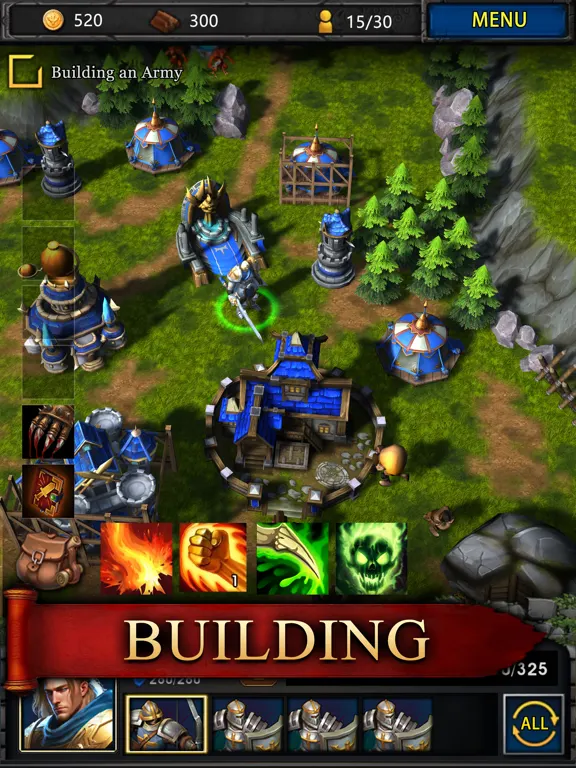
A mobile SLG usually has several connected systems. City building creates resources and unlocks features. Troops give the player military strength. Heroes or commanders shape battle identity. Alliances add social goals. Events create reasons to log in and use your growing power. Alliance at War II uses these foundations but adds a fantasy world and real RTS control.
- Build and grow a fantasy city.
- Develop troops, heroes, and guardians.
- Join alliance events, wars, and cooperative challenges.
- Control units in real time during selected battles.
SLG vs RTS
SLG and RTS are not the same thing, but they can overlap. SLG focuses on long-term strategy and persistent growth. RTS focuses on real-time battlefield decisions. Alliance at War II combines both: the SLG layer gives the player a kingdom, heroes, troop protection, recovery, and alliances; the RTS layer lets the player move units, split formations, flank enemies, and time skills manually.
Why fantasy SLG works
Fantasy helps an SLG feel more expressive. Instead of only managing ordinary troops, players can build around the Sorceress, Dwarf King, Oracle, Phoenix, Fire Dragon, Cerberus, and other guardians. Campaign chapters, castle defense, demon events, and cross-server wars give the persistent strategy loop more variety.
Who usually enjoys SLG gameplay?
SLG gameplay is a good match for players who like steady improvement and strategic planning. It appeals to people who enjoy logging in, making progress, preparing for events, and seeing their decisions compound over time. It may not be the right fit for someone who only wants instant matches with no persistent growth. But for players who like building a kingdom, coordinating with allies, and preparing for scheduled wars, the genre can be very sticky.
Alliance at War II is especially suited for players who want an SLG game with more active battle moments. The RTS layer gives commanders something to do beyond upgrades and timers, while the fantasy hero layer gives progression more personality. That makes it easier for new players to understand why the genre is popular: the reward is not only winning one battle, but watching your whole strategic plan become stronger.
For beginners, the easiest way to understand an SLG is to think of it as a living campaign. Your city, heroes, troops, alliance, and event history all become part of the same story. Each session adds another decision to that campaign and makes the next strategic choice more meaningful.
FAQ
What does SLG game mean?
In mobile gaming, SLG commonly refers to simulation strategy gameplay built around long-term growth, armies, alliances, and events.
Is Alliance at War II an SLG game?
Yes. It is a fantasy mobile SLG with kingdom building, heroes, alliances, war events, and RTS troop control.
Is SLG gameplay beginner friendly?
It can be, especially when the game includes clear growth goals, recovery systems, and event modes that reduce pressure.